

SHUBIDUBI
A roomful of people.
A sheet of strange instructions.
Everything else happens from there.
Participatory sessions, from small gatherings to large-scale events.
No briefing. No competition. No required outcome.
How it works

01. Enter the room
Everyone receives a printed sheet containing 25 or 50 tasks. A room with tables is enough.

02. Choose what to do
Choose which tasks to attempt, in what order and for how long. Work alone or with others.

03. The room takes over
People move between activities. Groups form, dissolve and reappear. Sometimes the room begins inventing its own rules.
Inside a Shubidubi room
Different people. Different tasks.
One room.
A Shubidubi room in motion
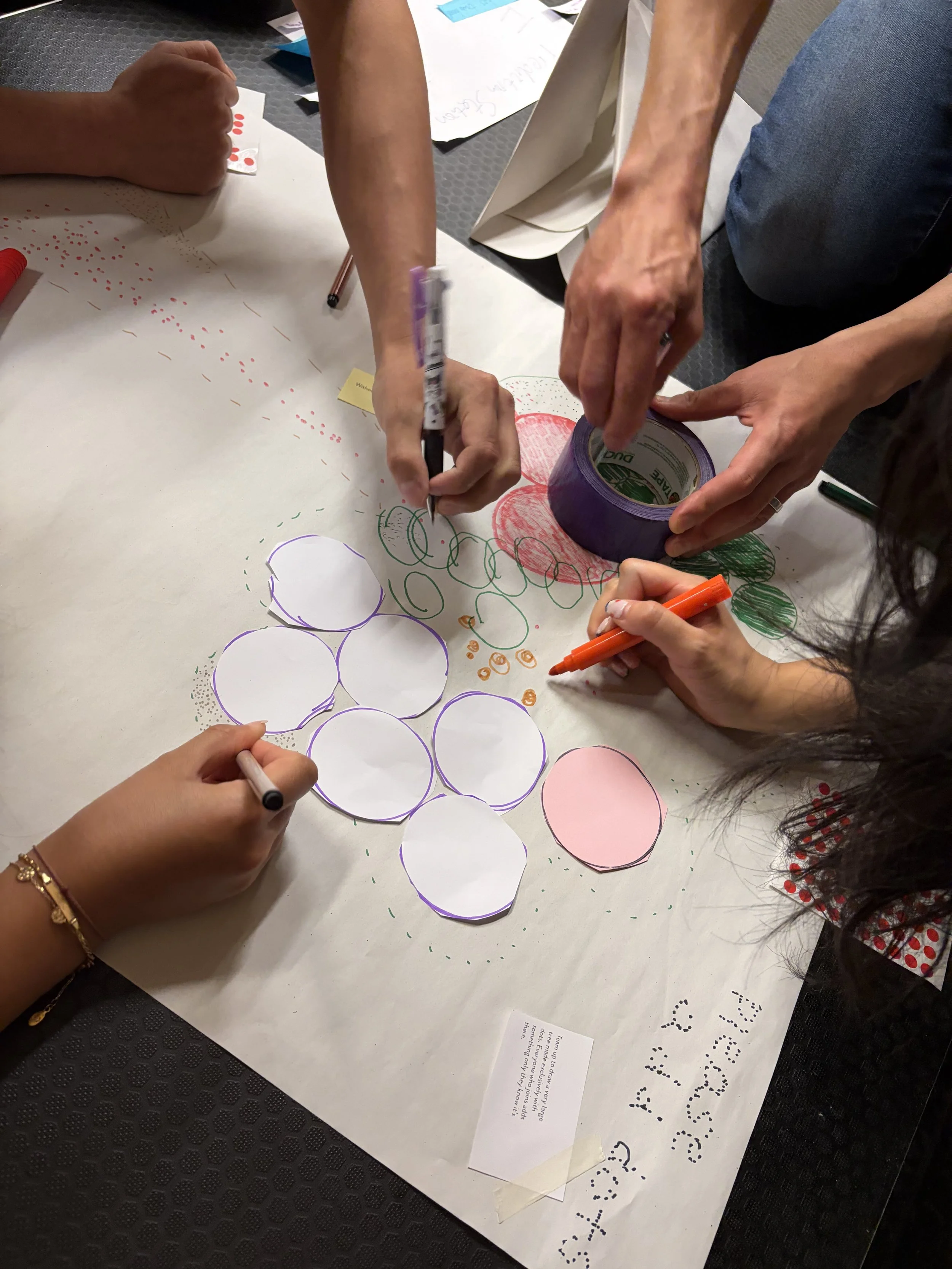
Cross-table collaboration
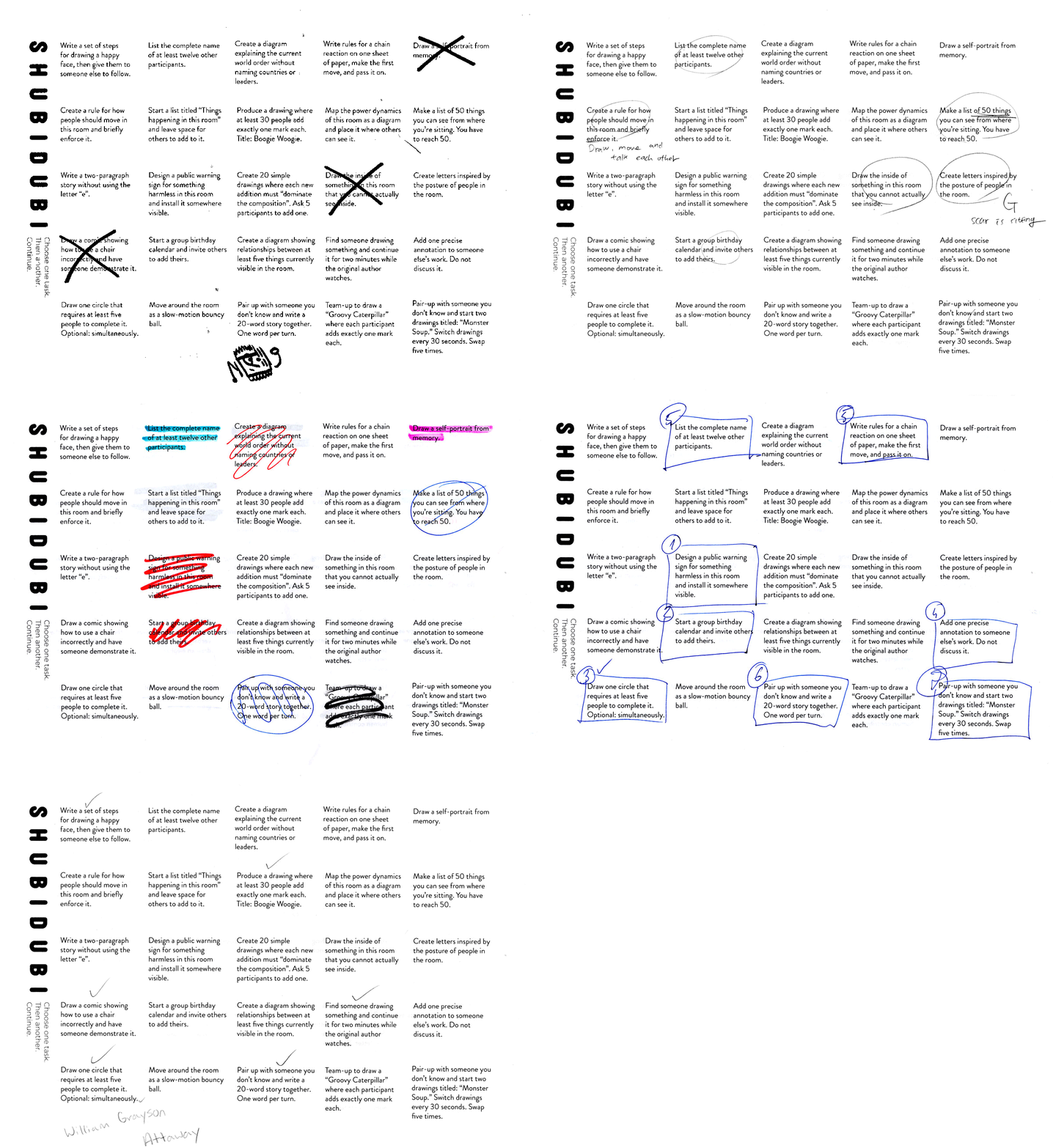
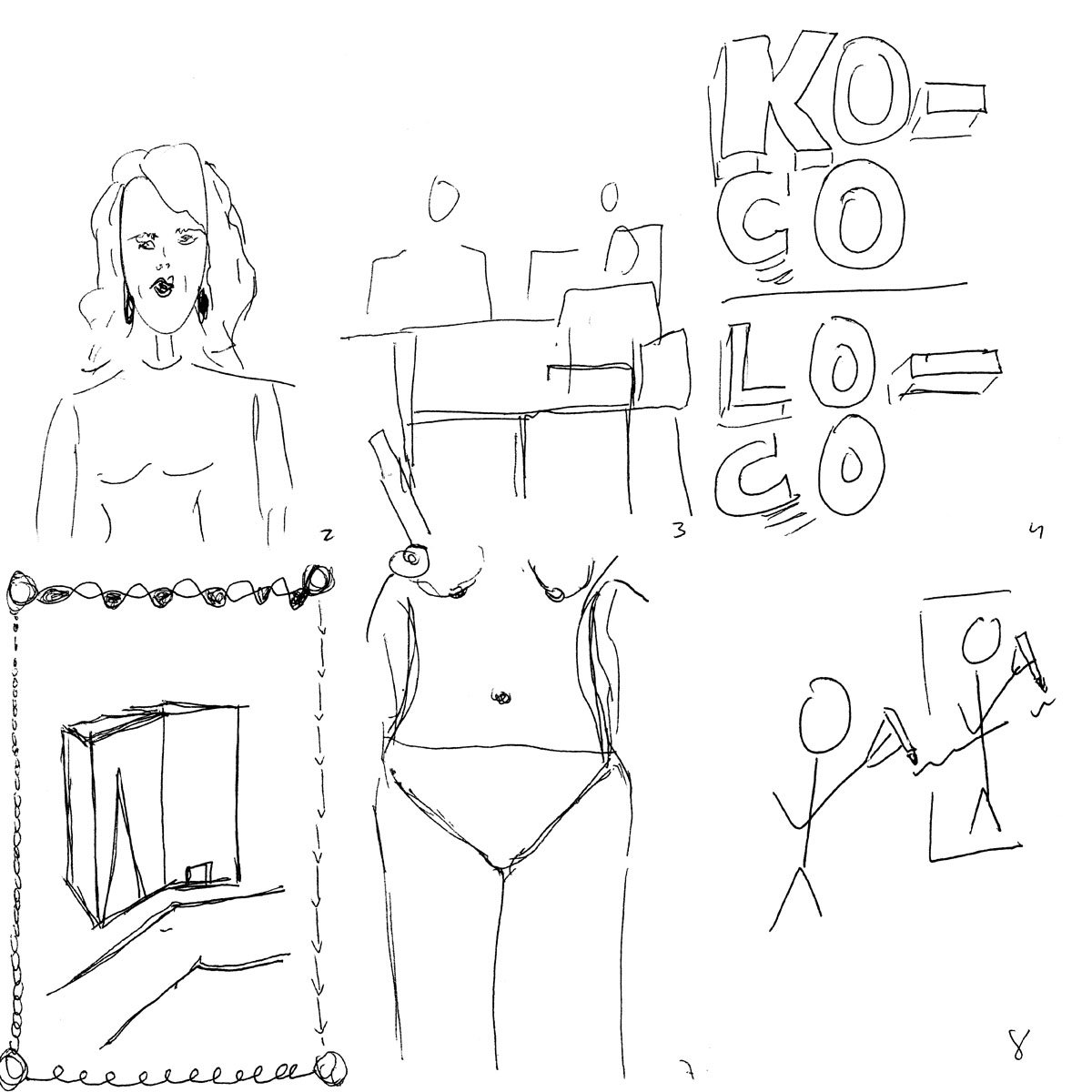
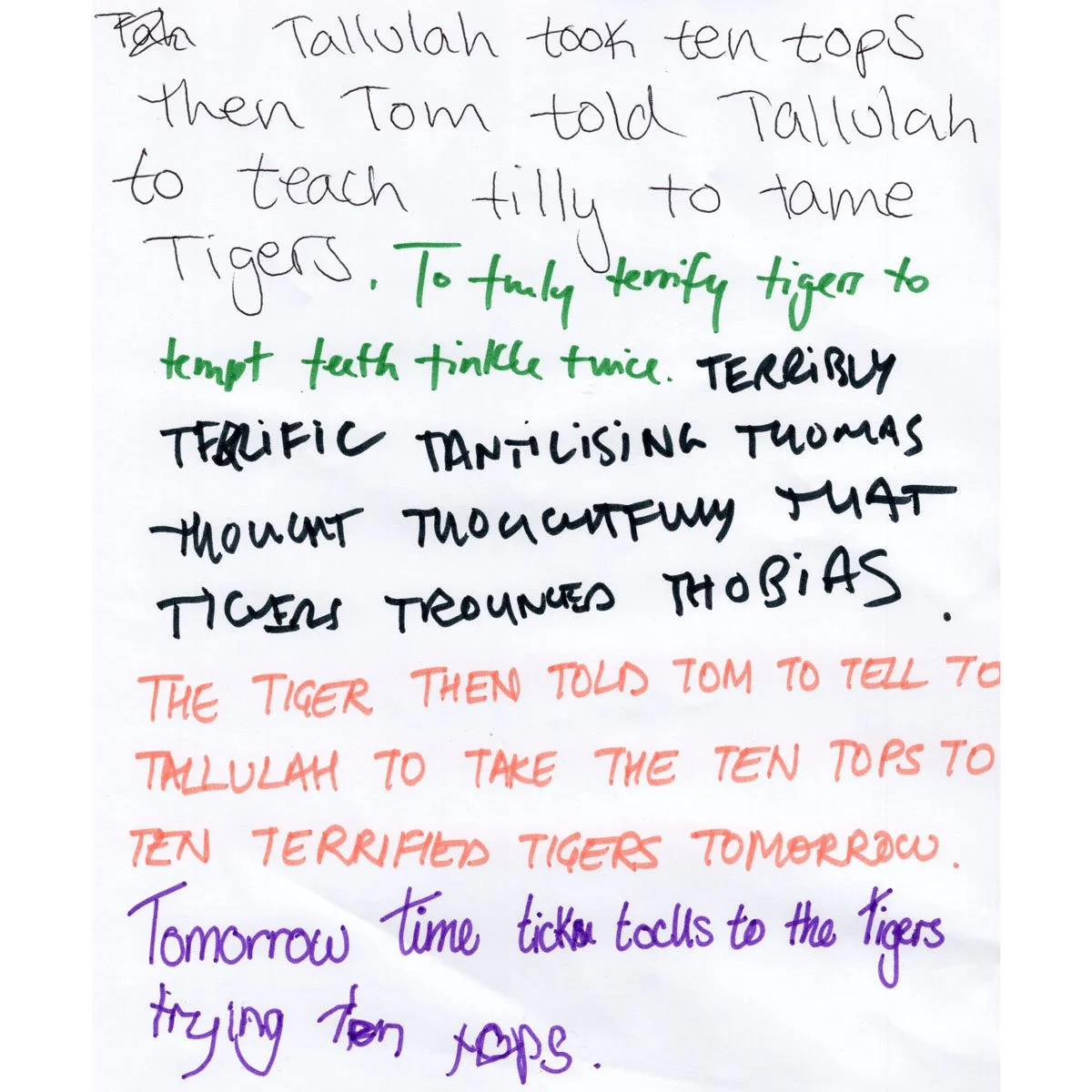
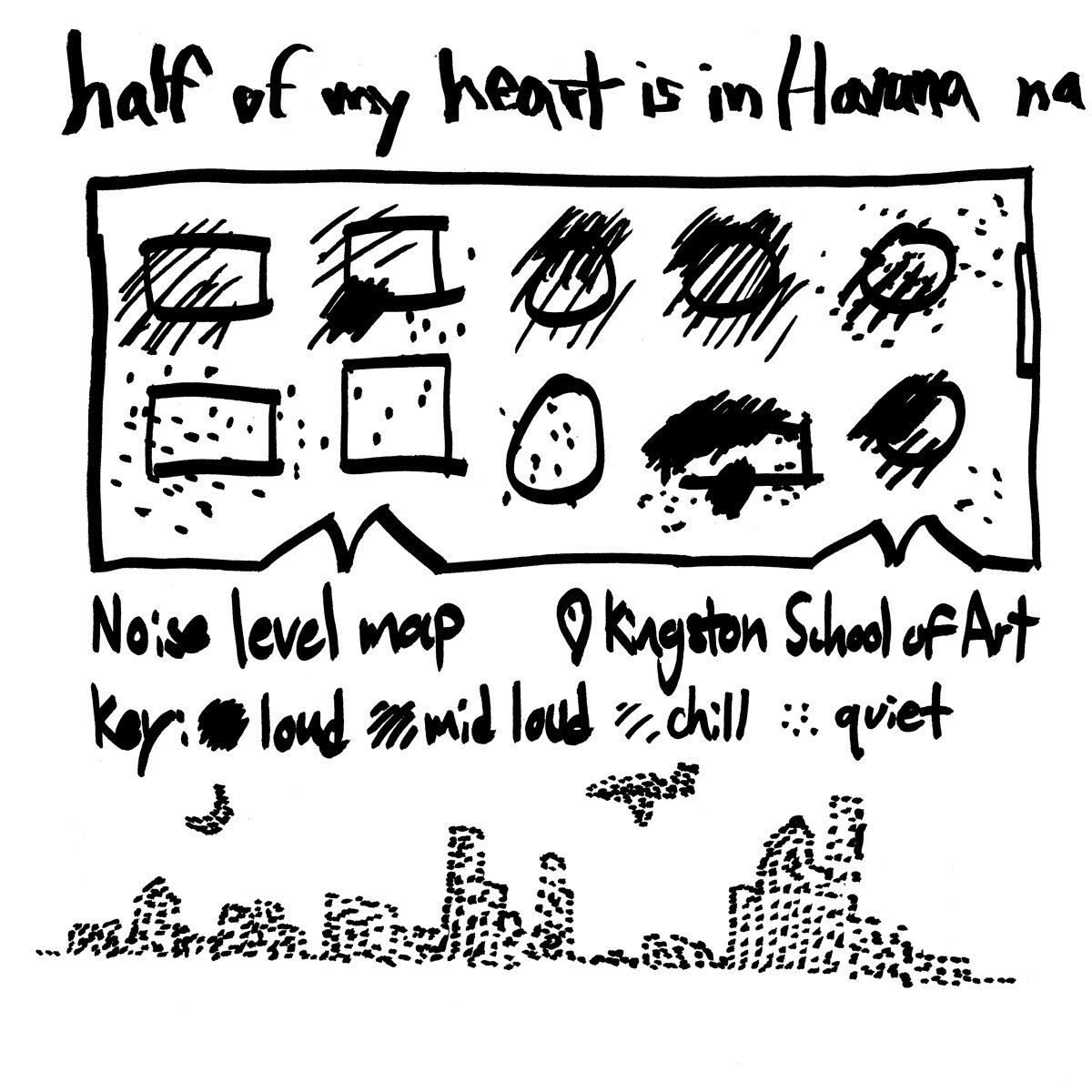
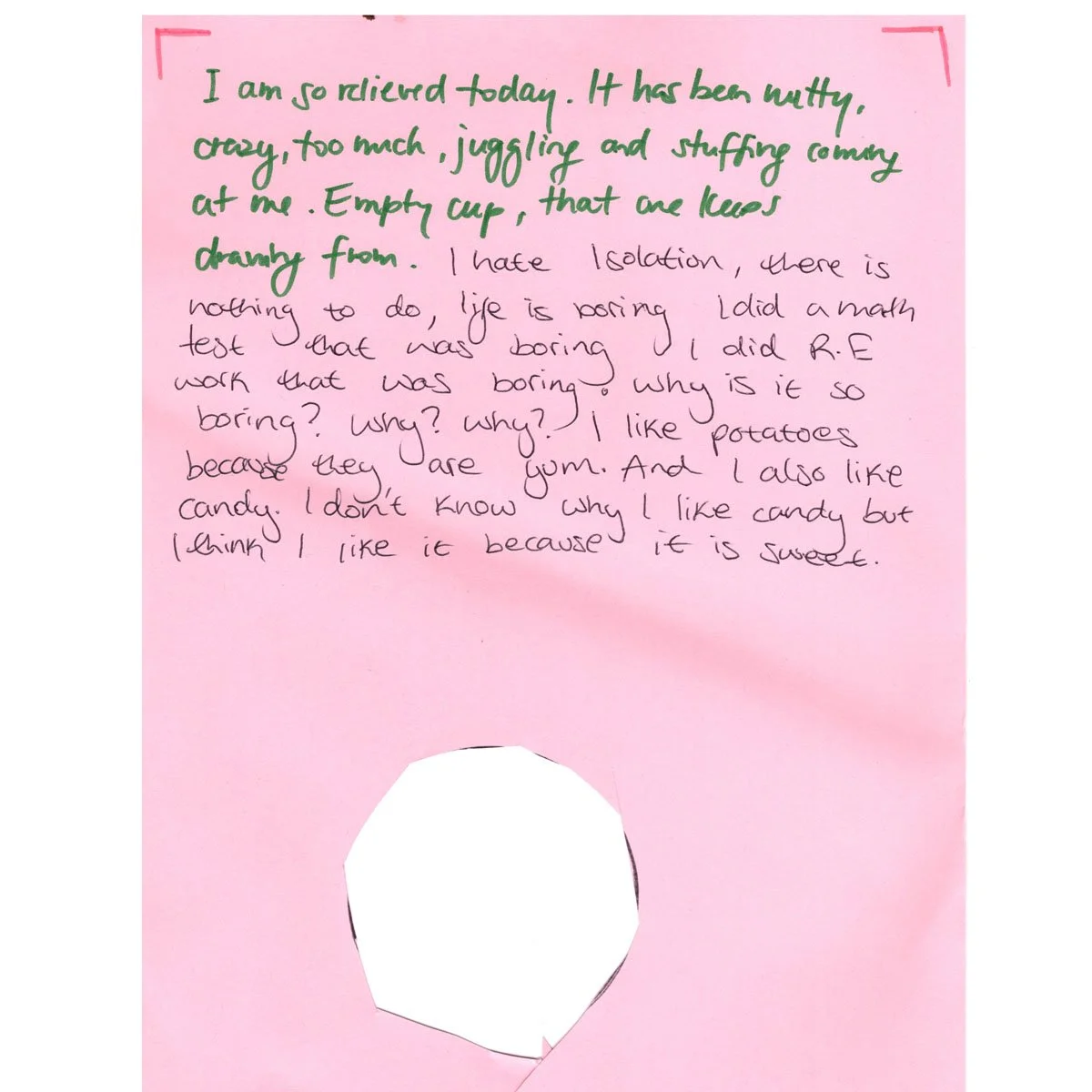
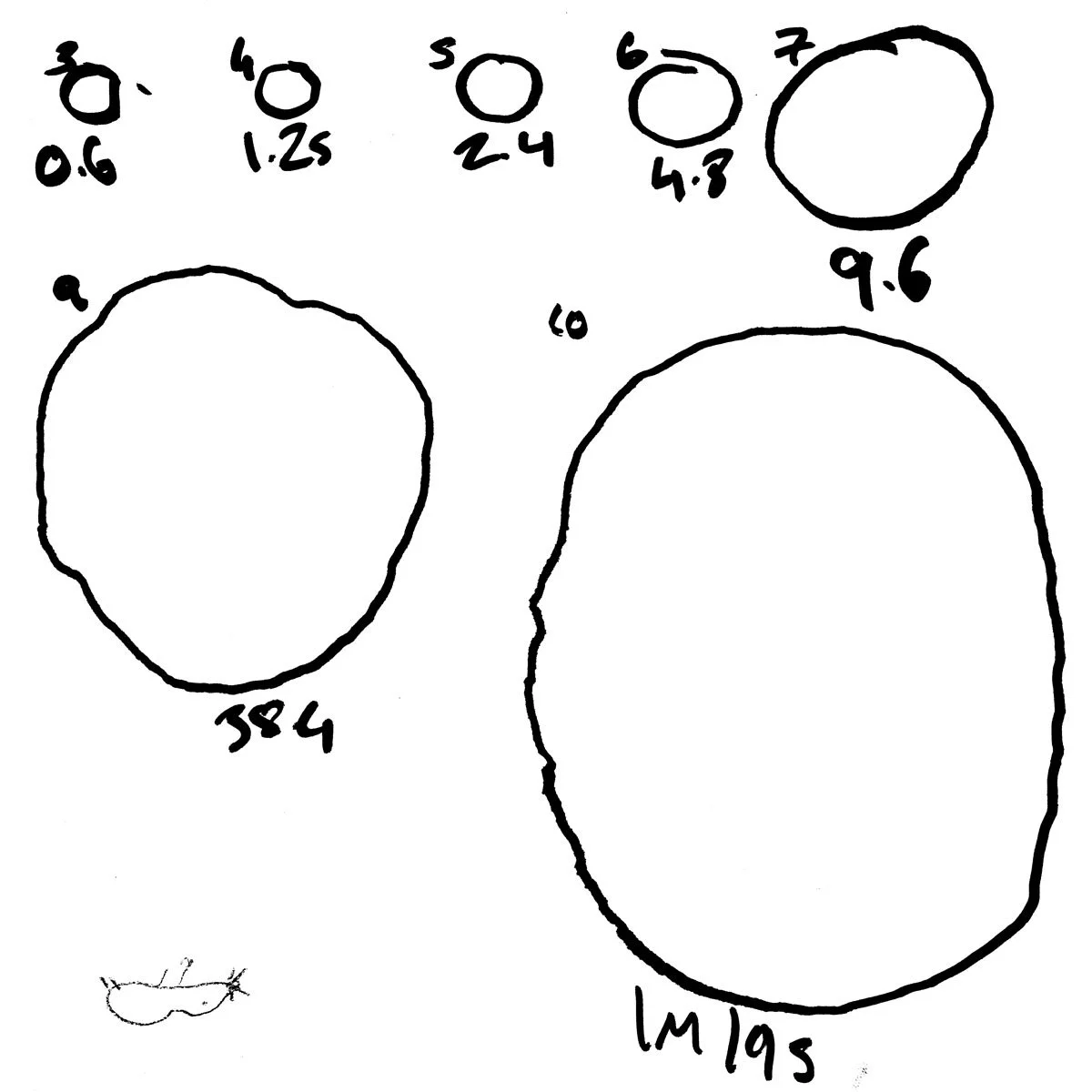
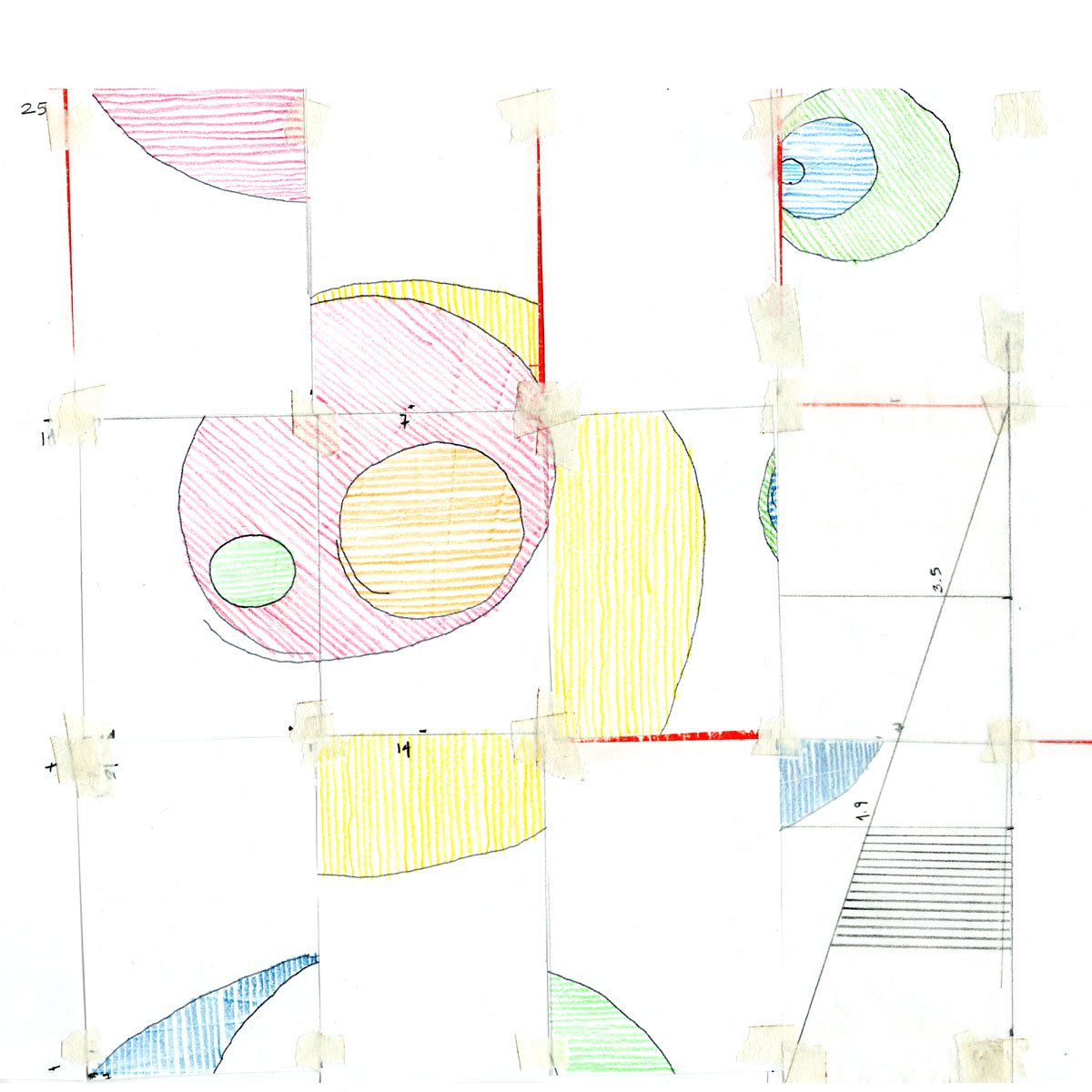
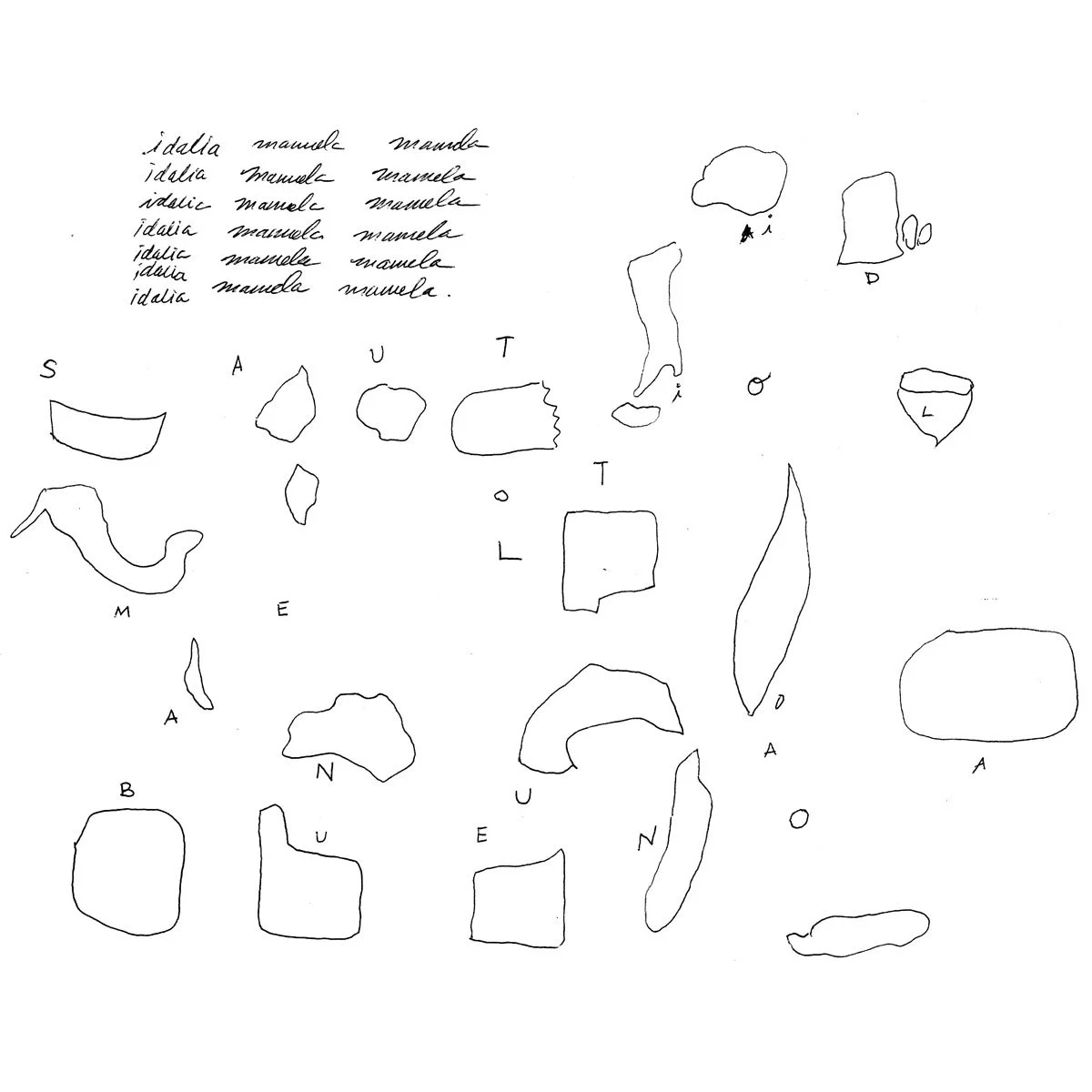
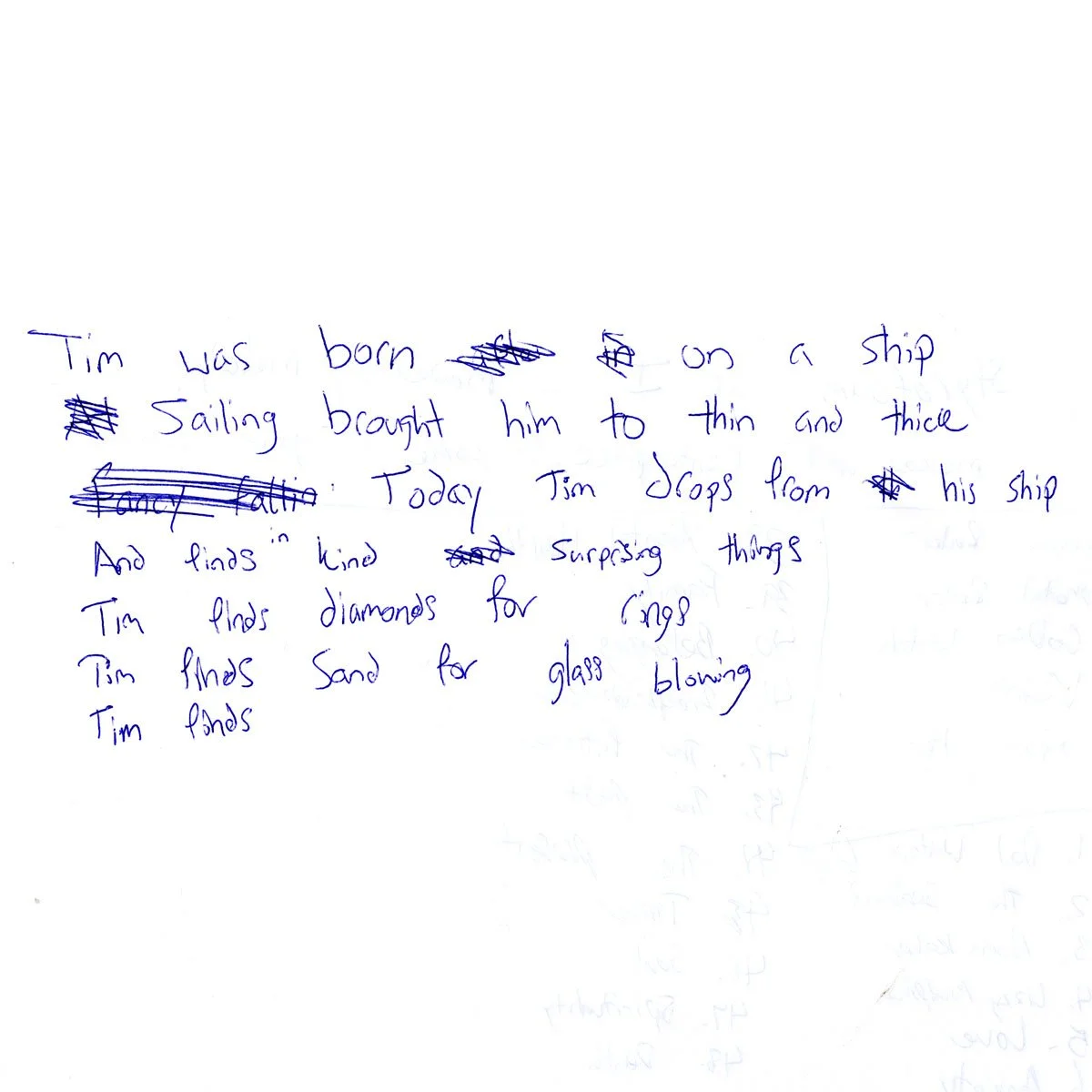
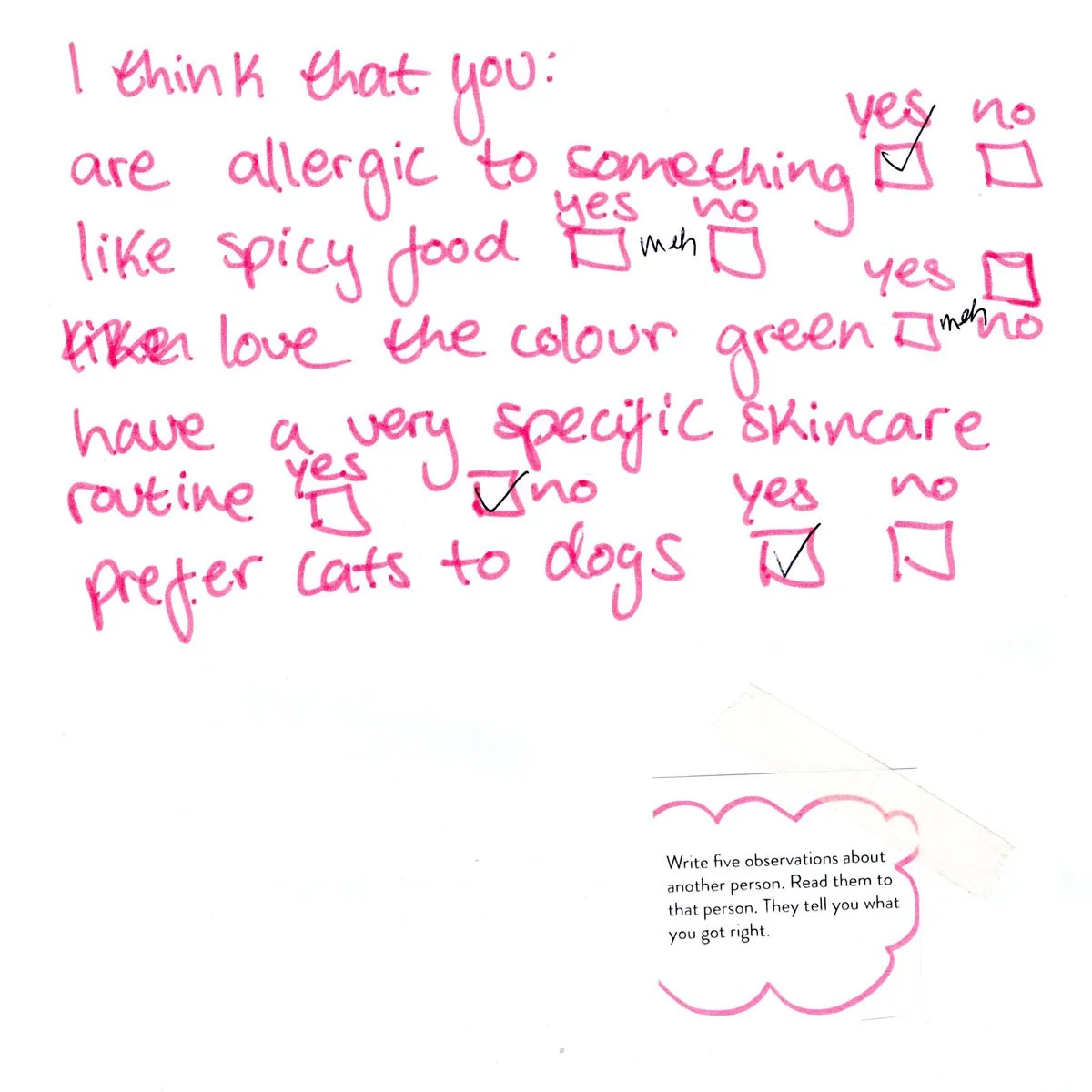
Worked task sheets after Shubidubi
Things we've seen happen

01. Strangers collaborate
People sometimes join tasks initiated by someone they've never met. The instruction provides a reason to work together.
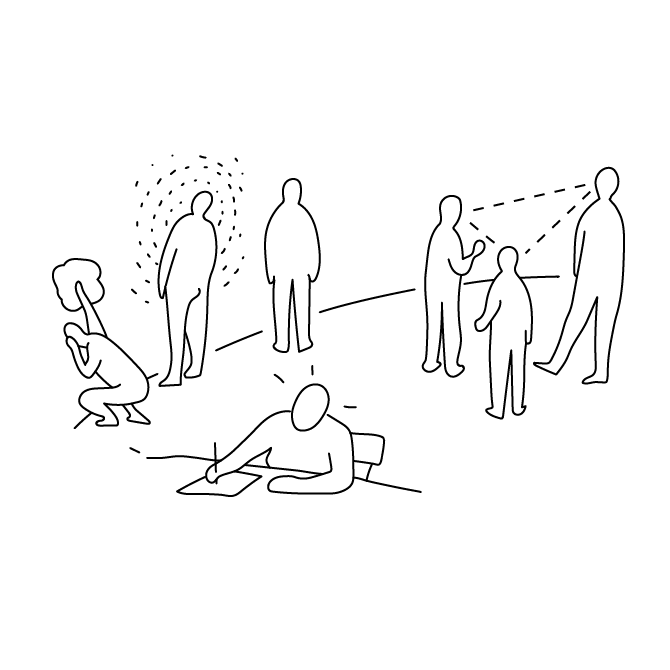
02. Rooms self-organise
Groups form and dissolve. Participants introduce activities that spread beyond their immediate group.
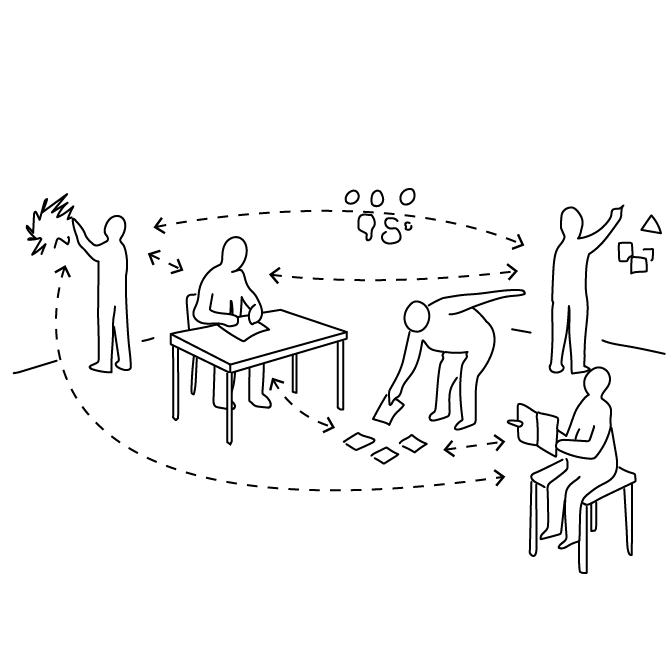
03. Rank suspends
People with different roles work alongside one another, following the same set of instructions.
It leaves a record
Some tasks leave objects. Others leave marks, arrangements or unfinished things. Together, they form an accidental record of what happened.
Where it fits
An existing gathering is enough. Shubidubi can occupy an afternoon or become part of a larger programme. It adapts to different groups without requiring a shared objective.
Studio gatherings and team days
University events and exhibitions
Museum and cultural programmes
Member events and socials
Conferences and festivals
Ways to commission
01. A session
One Shubidubi session within an existing event, gathering or occasion.
02. A series
Three or four sessions with the same group. Each task set responds to what happened in previous sessions.
03. A programme
A larger sequence developed with an organisation, involving different groups across several sessions.
04. A demo
Twenty minutes. Six tasks. The quickest way to understand Shubidubi is to experience it.
05. A kit
Printed instructions and materials delivered for groups who want to run Shubidubi independently.





Practical
Group size: From small groups to large gatherings and multi-session programmes. Facilitation adapts to the occasion.
Duration: 1 - 3.5 hours
Facilitation: One facilitator for every 50 participants
Setting: Any room with tables
Materials: Printed task sheets, paper, pens and simple making materials provided
Location: London-based, available internationally
Nothing to prove
Shubidubi doesn't ask participants to perform, compete, improve or demonstrate what they've learned.
There's no correct way through the tasks and no prescribed outcome.
What happens in the room belongs to the people in it.
How participants see Shubidubi
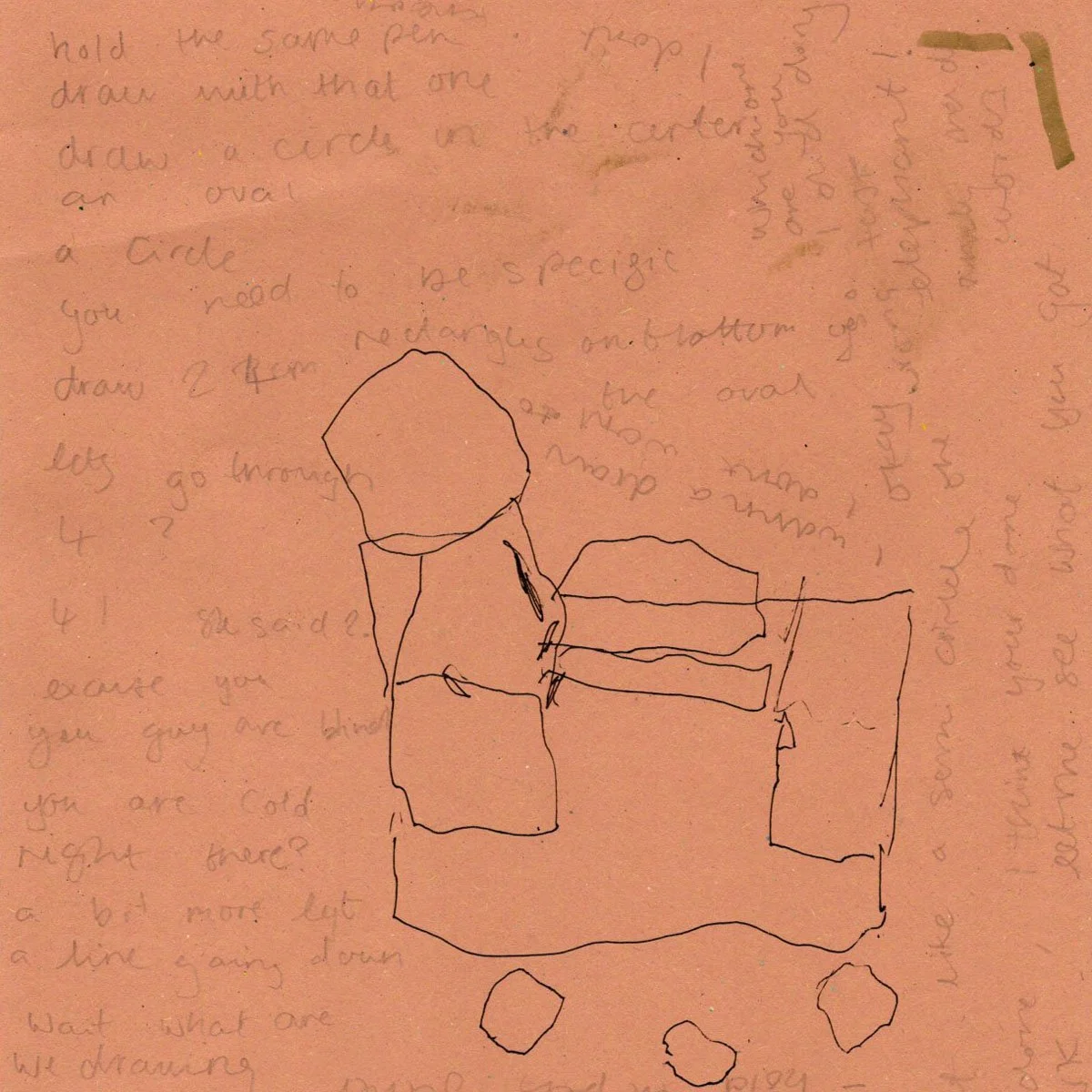
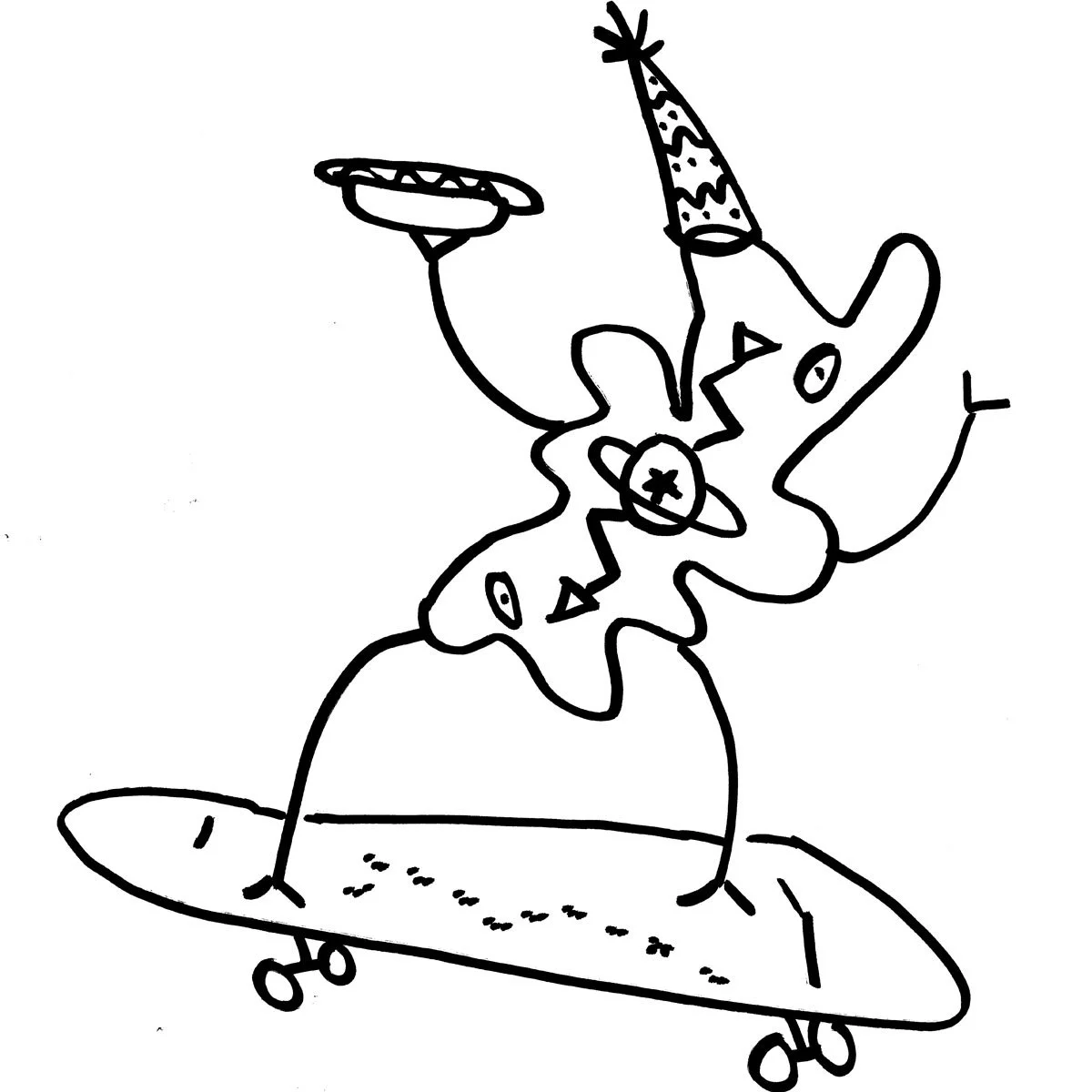
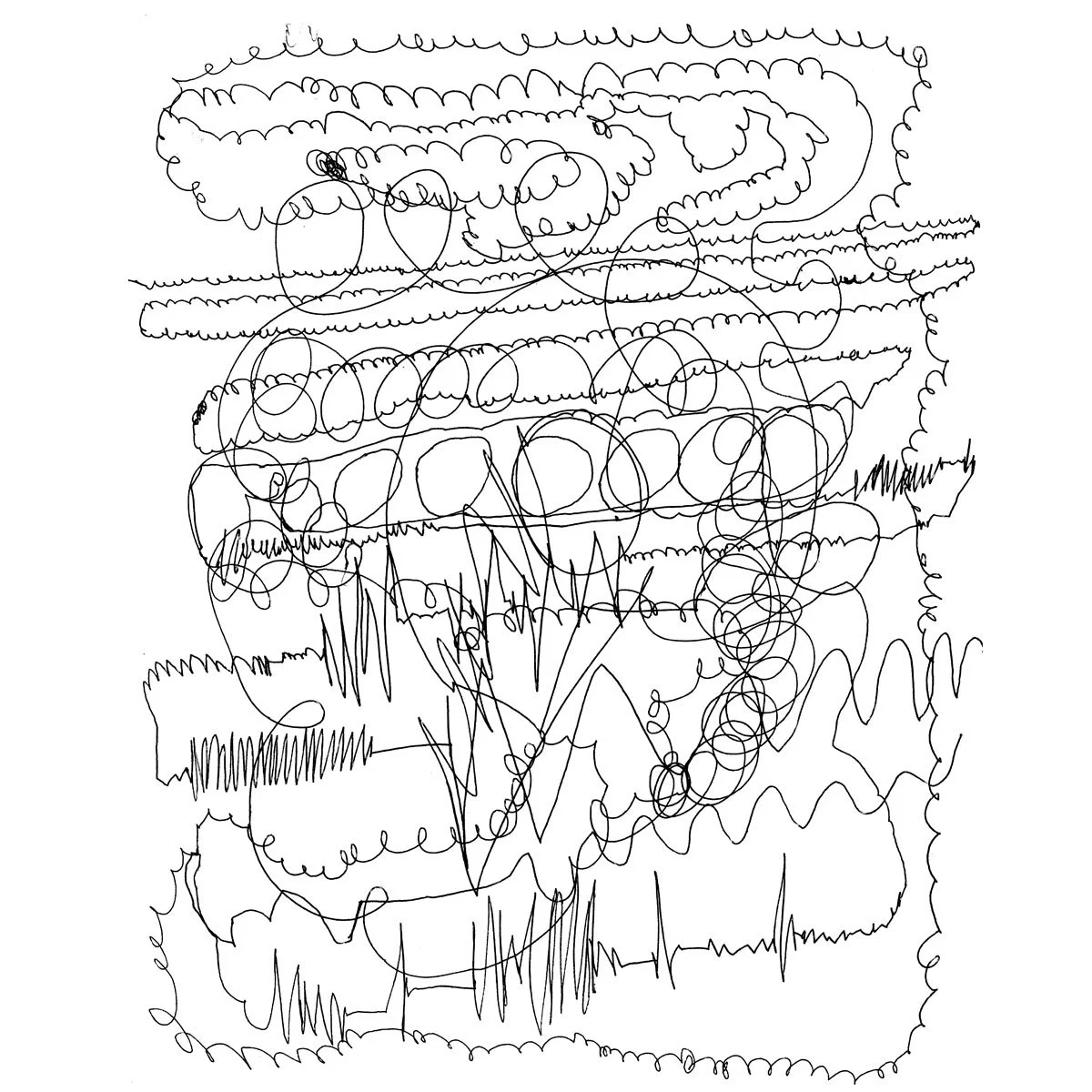
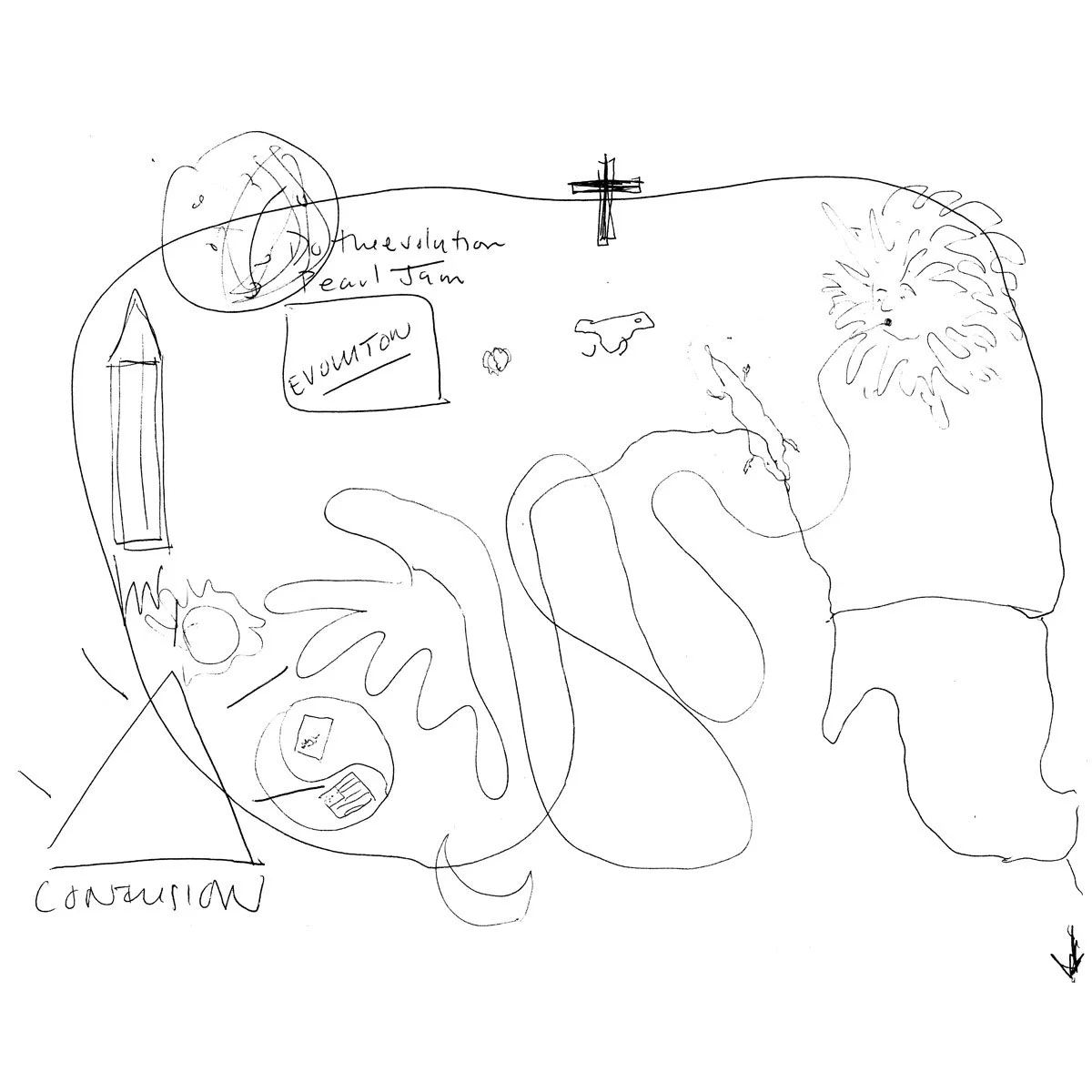
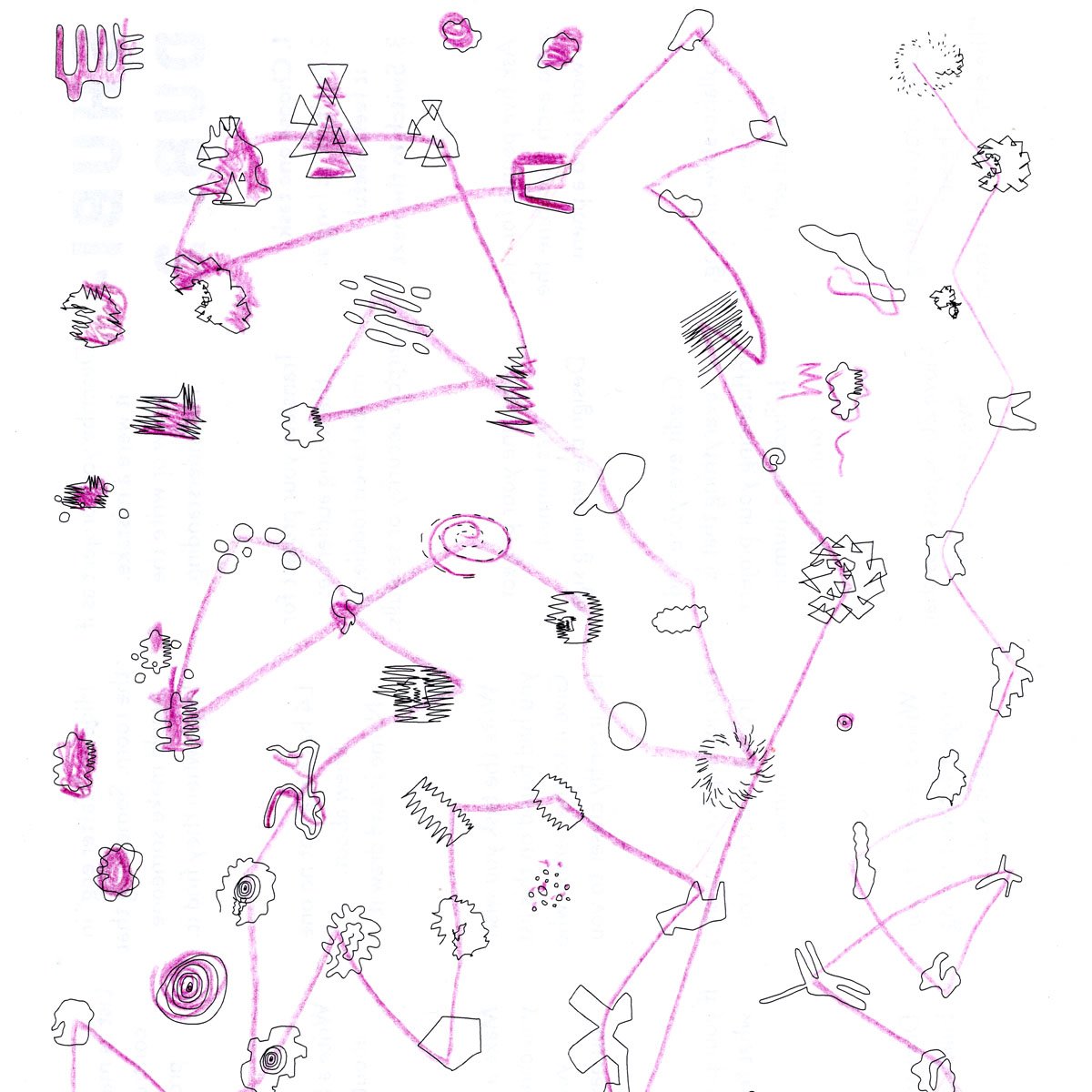
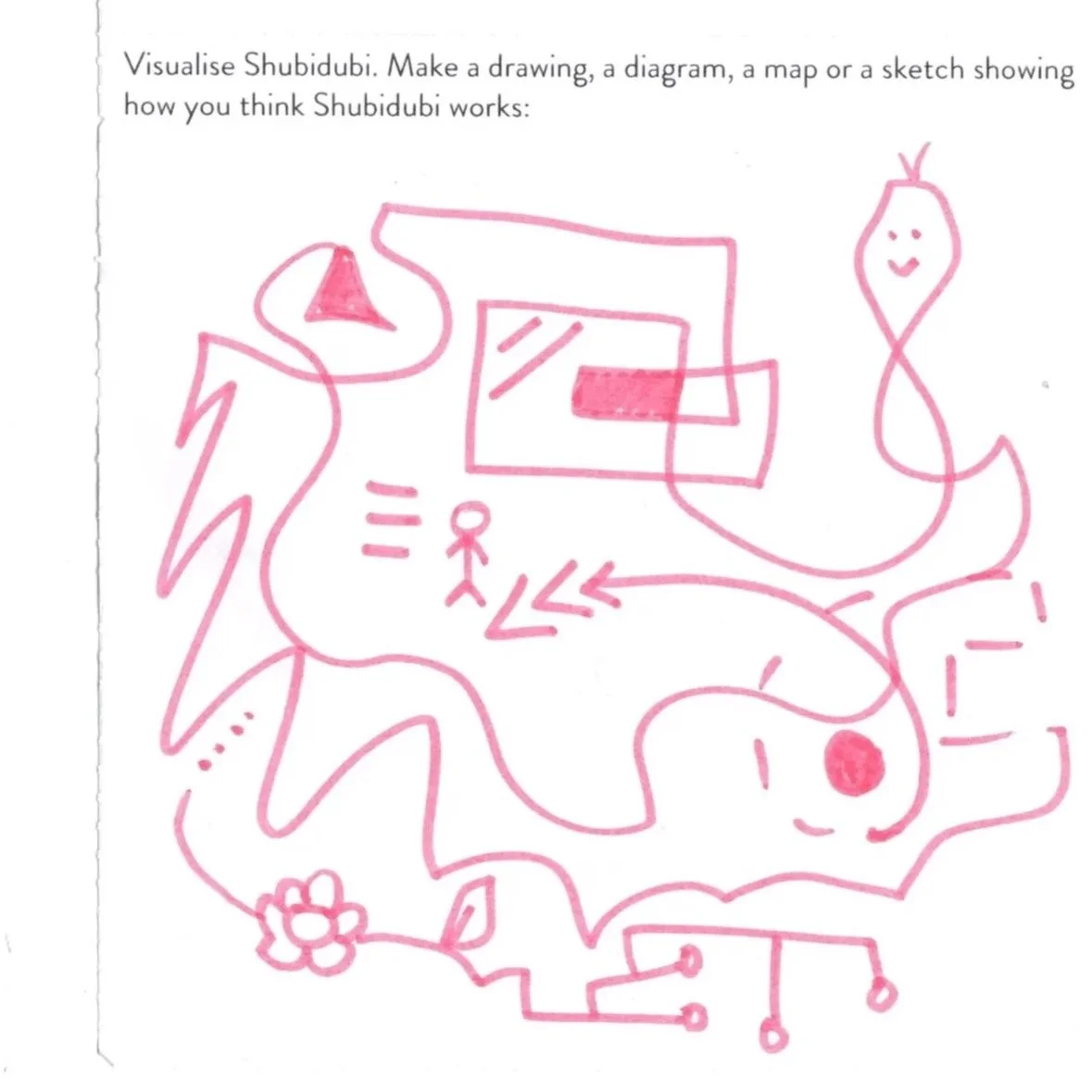
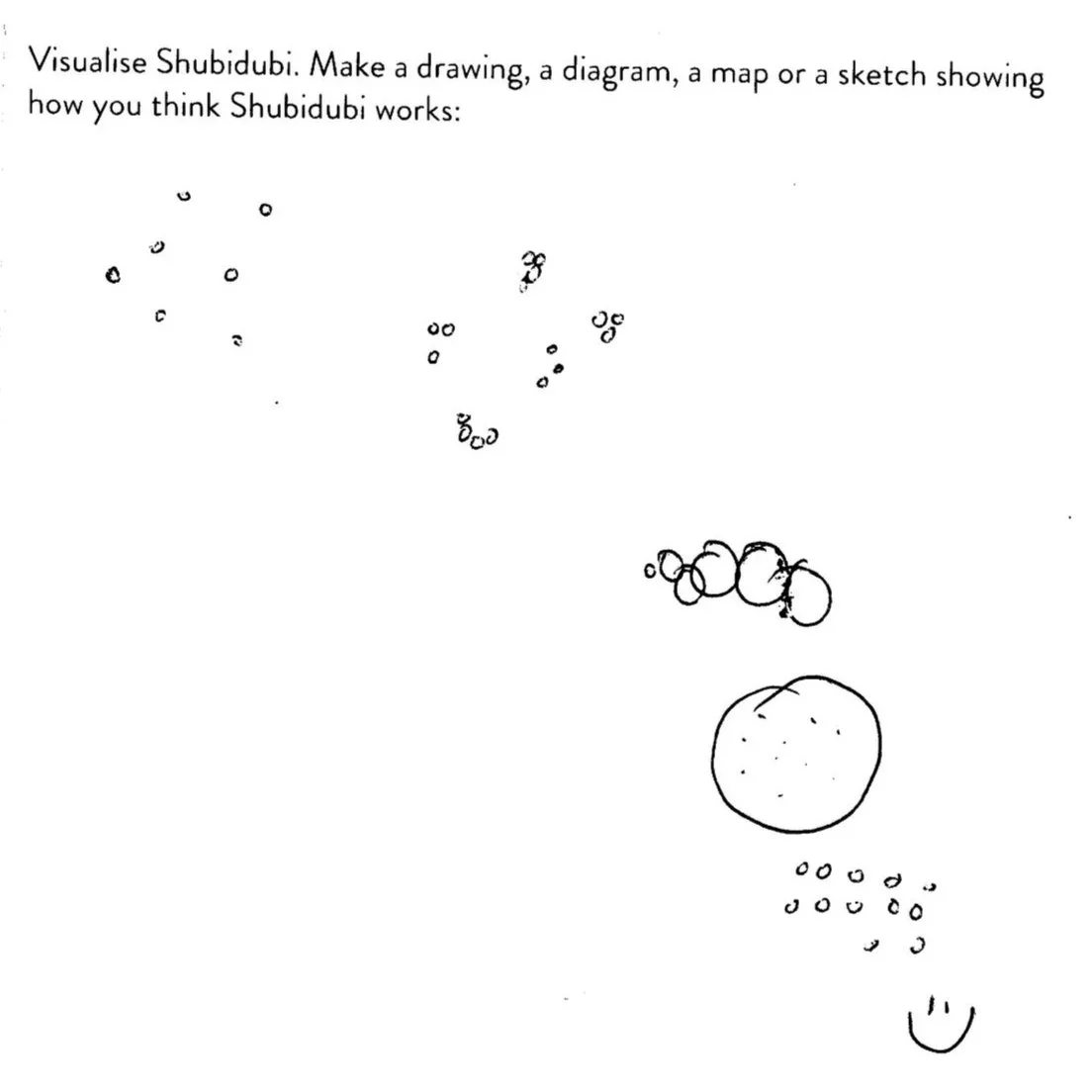
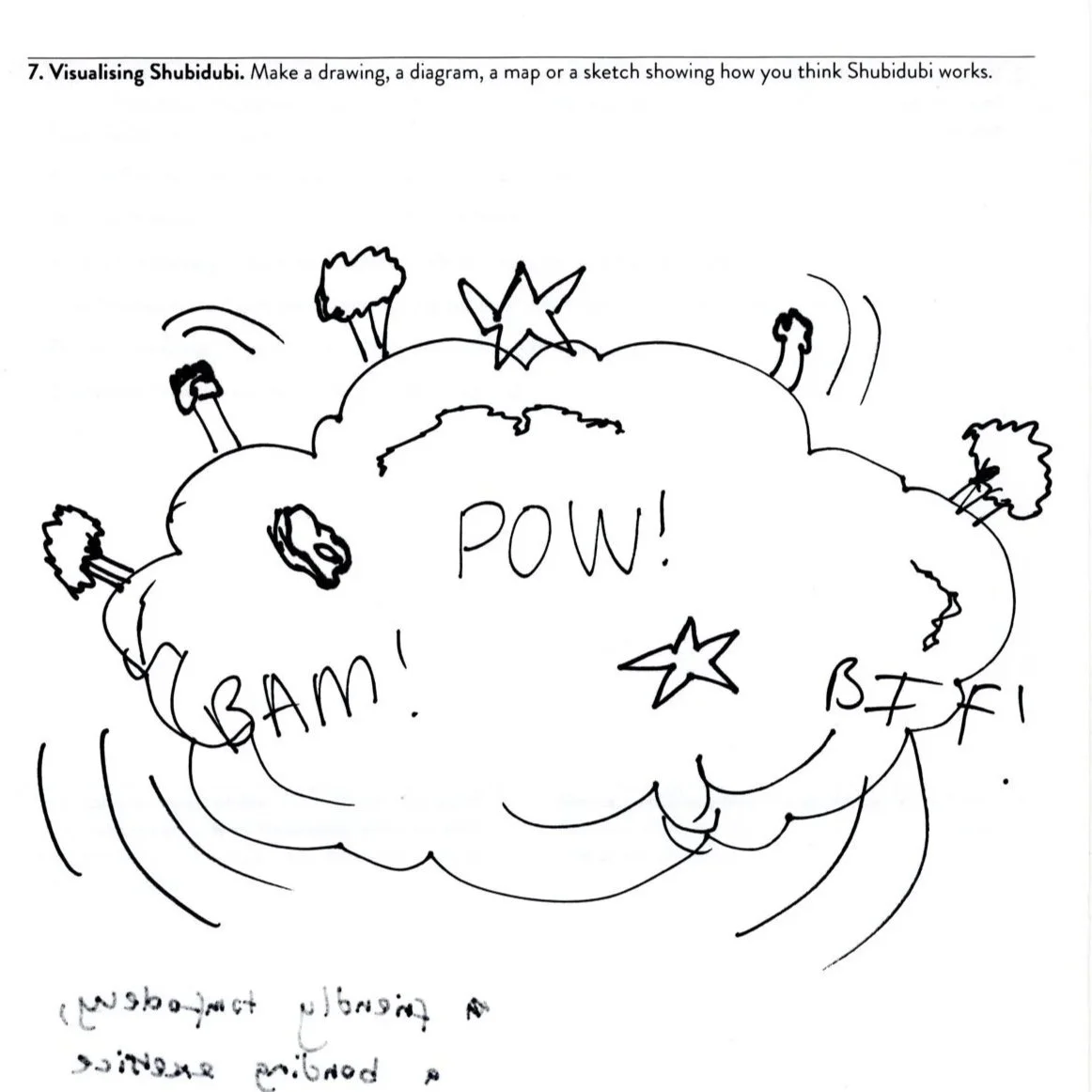
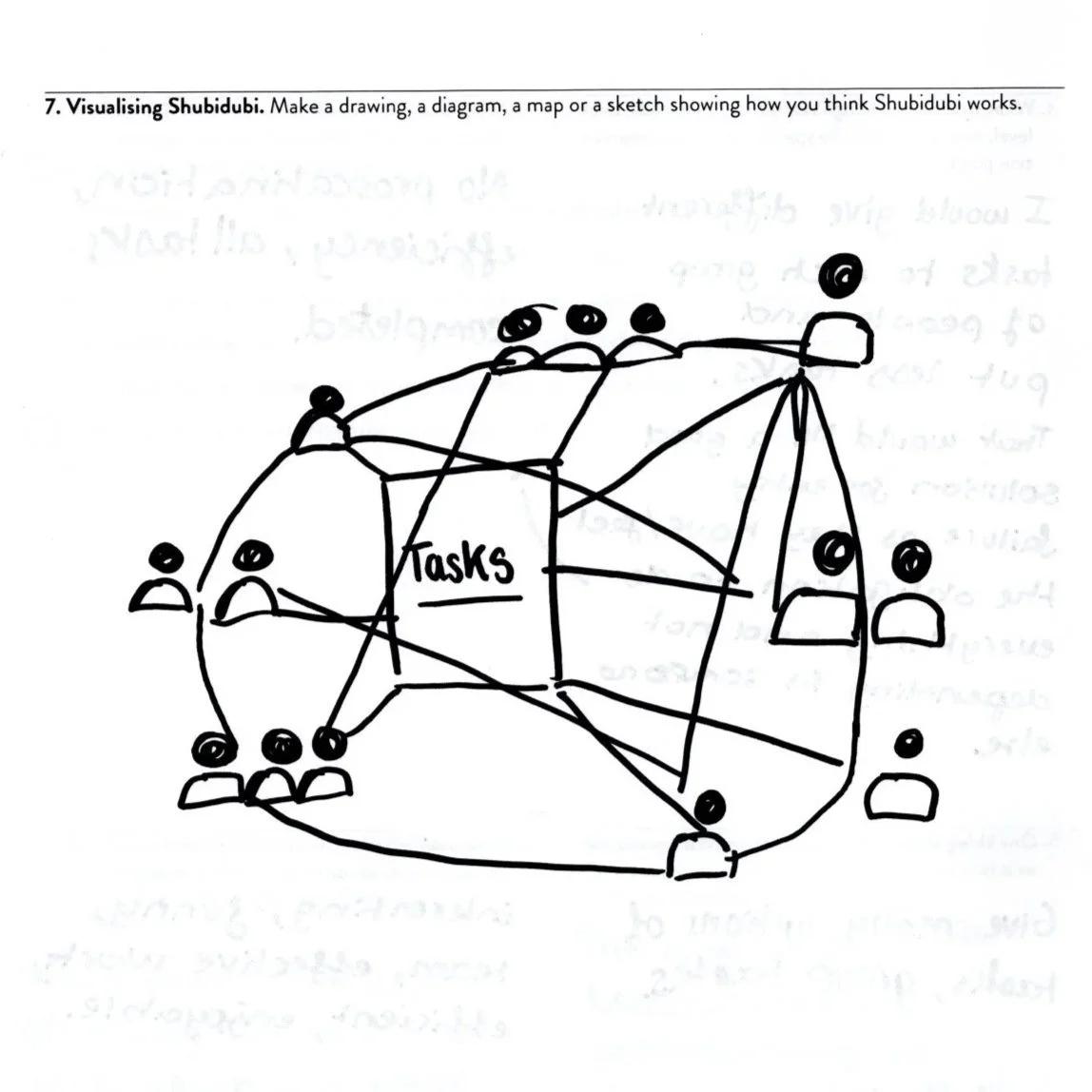
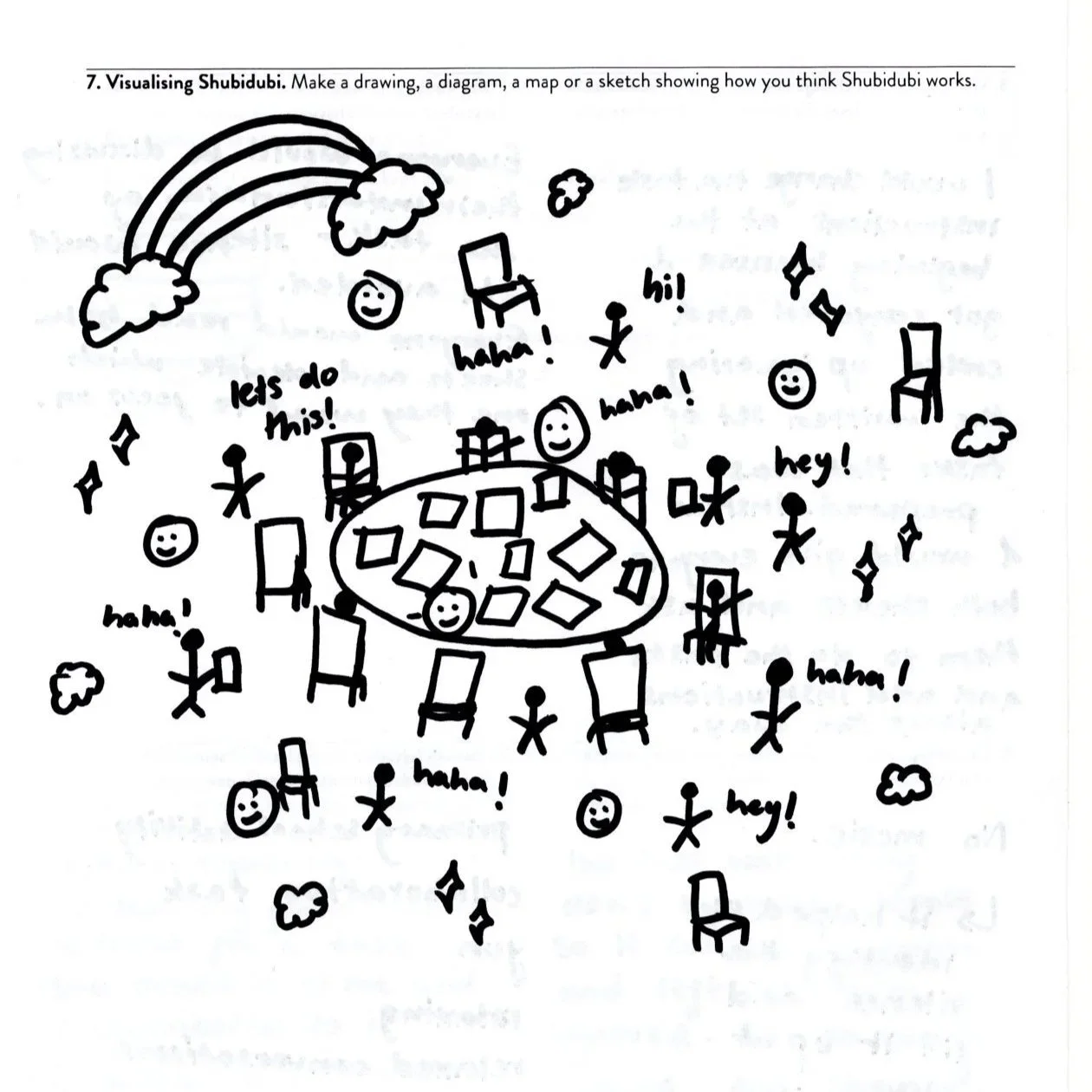
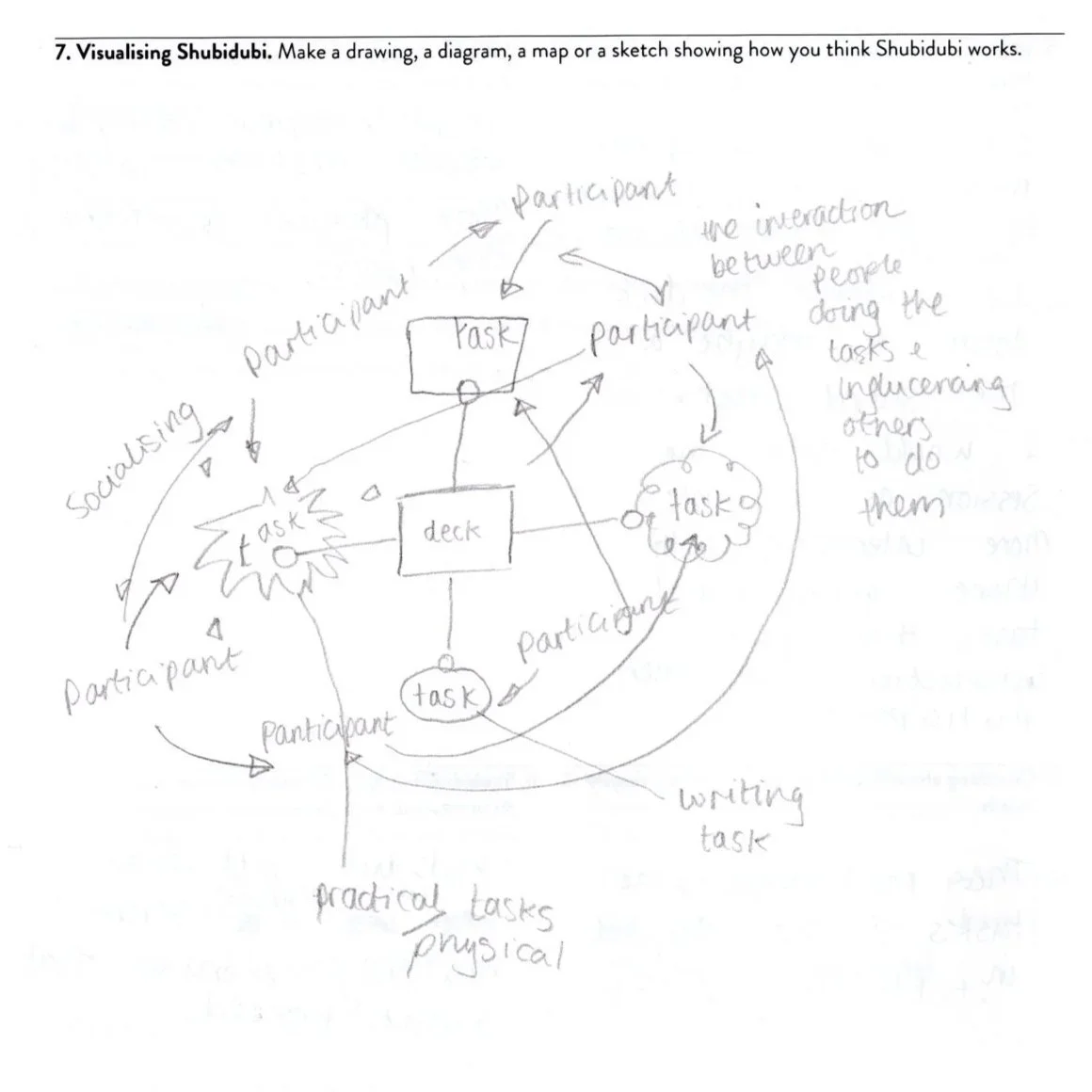
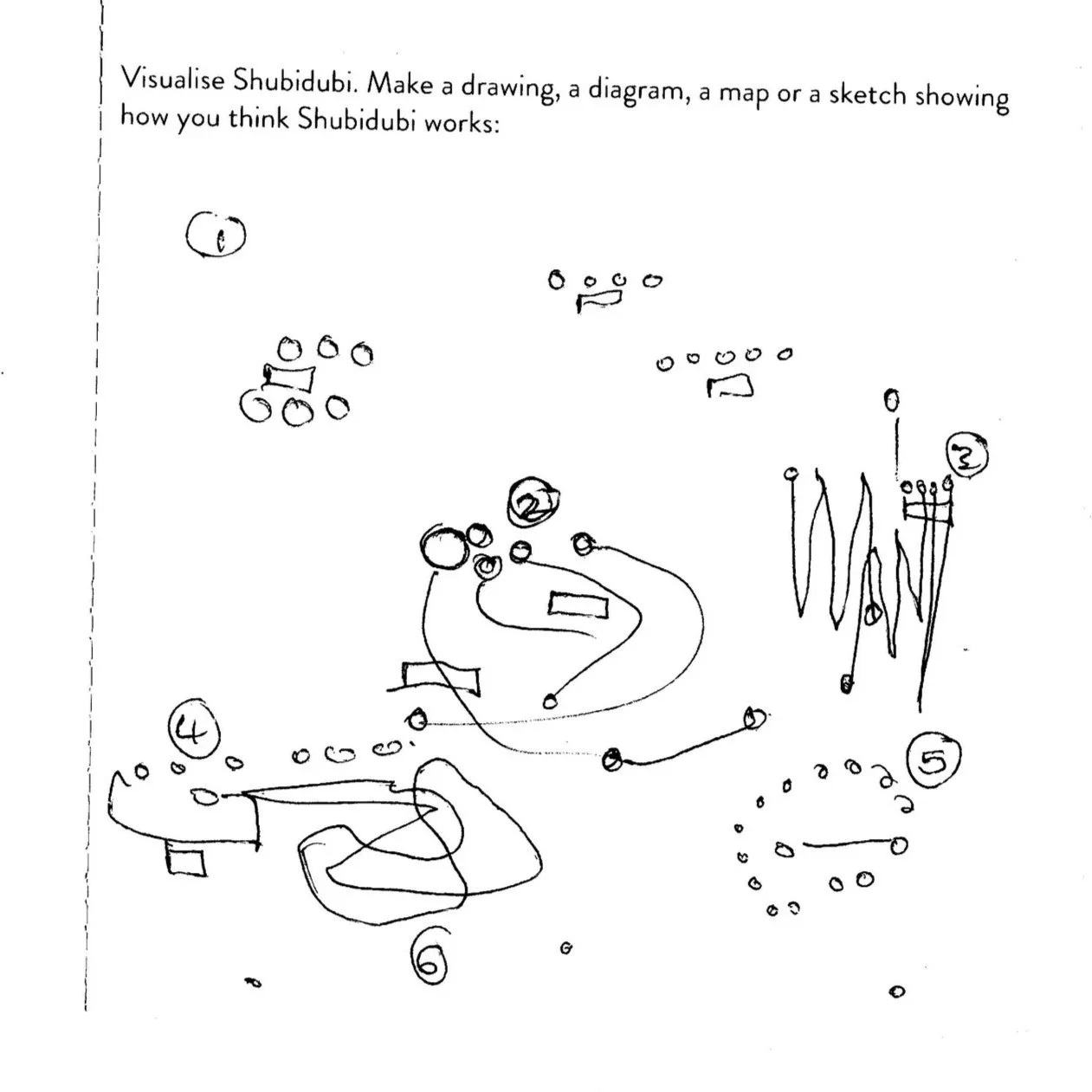
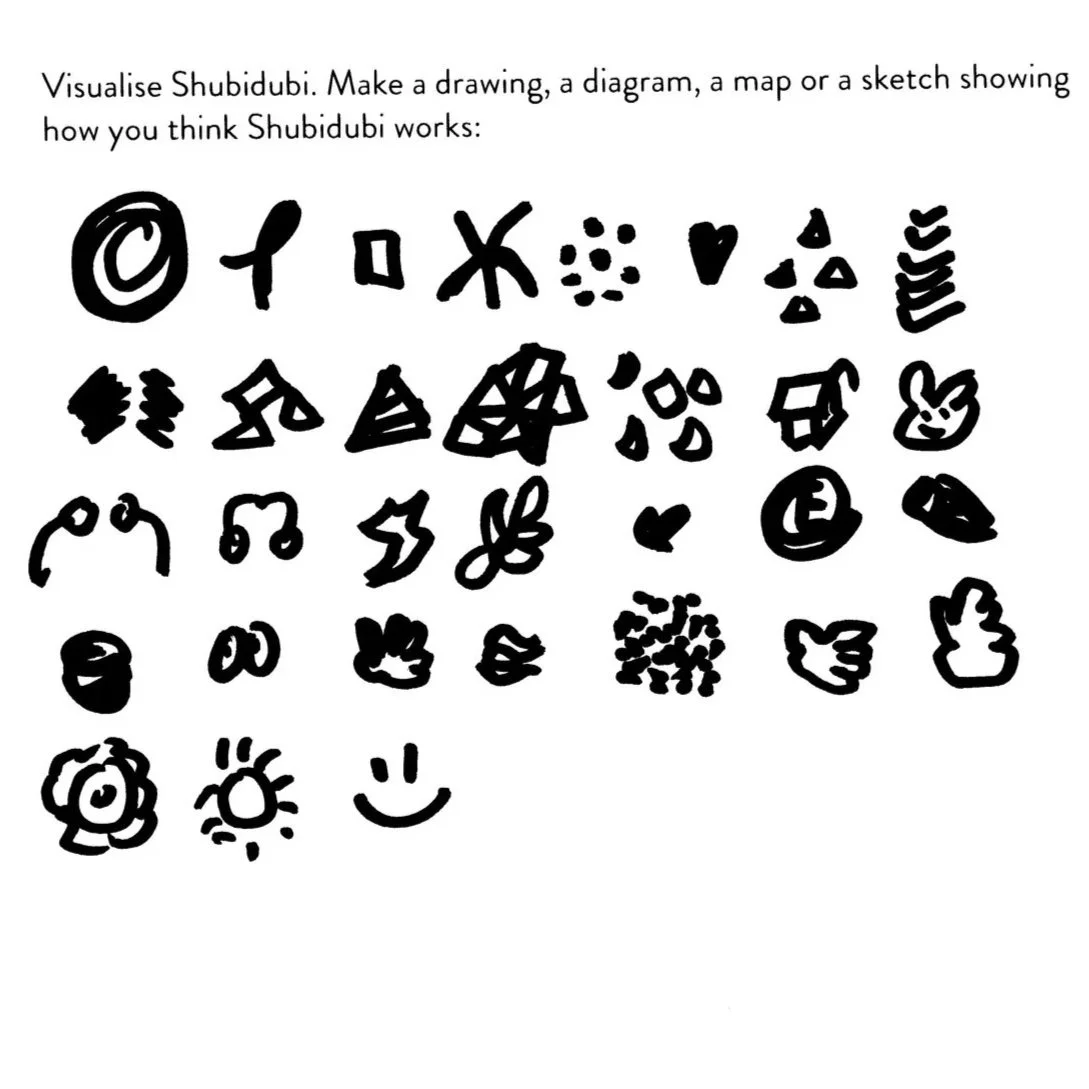
At the end of a session, participants are sometimes invited to draw how they think Shubidubi works. No two interpretations are quite alike.
Who's behind it
Shubidubi is developed and run by Alejandro Ramos Saavedra, a designer and Senior Lecturer at Kingston School of Art, with postgraduate degrees from the Royal College of Art and Imperial College London.
Behind the printed sheets sits Actionary, a larger system of operations, exploring how instructions generate different forms of activity.
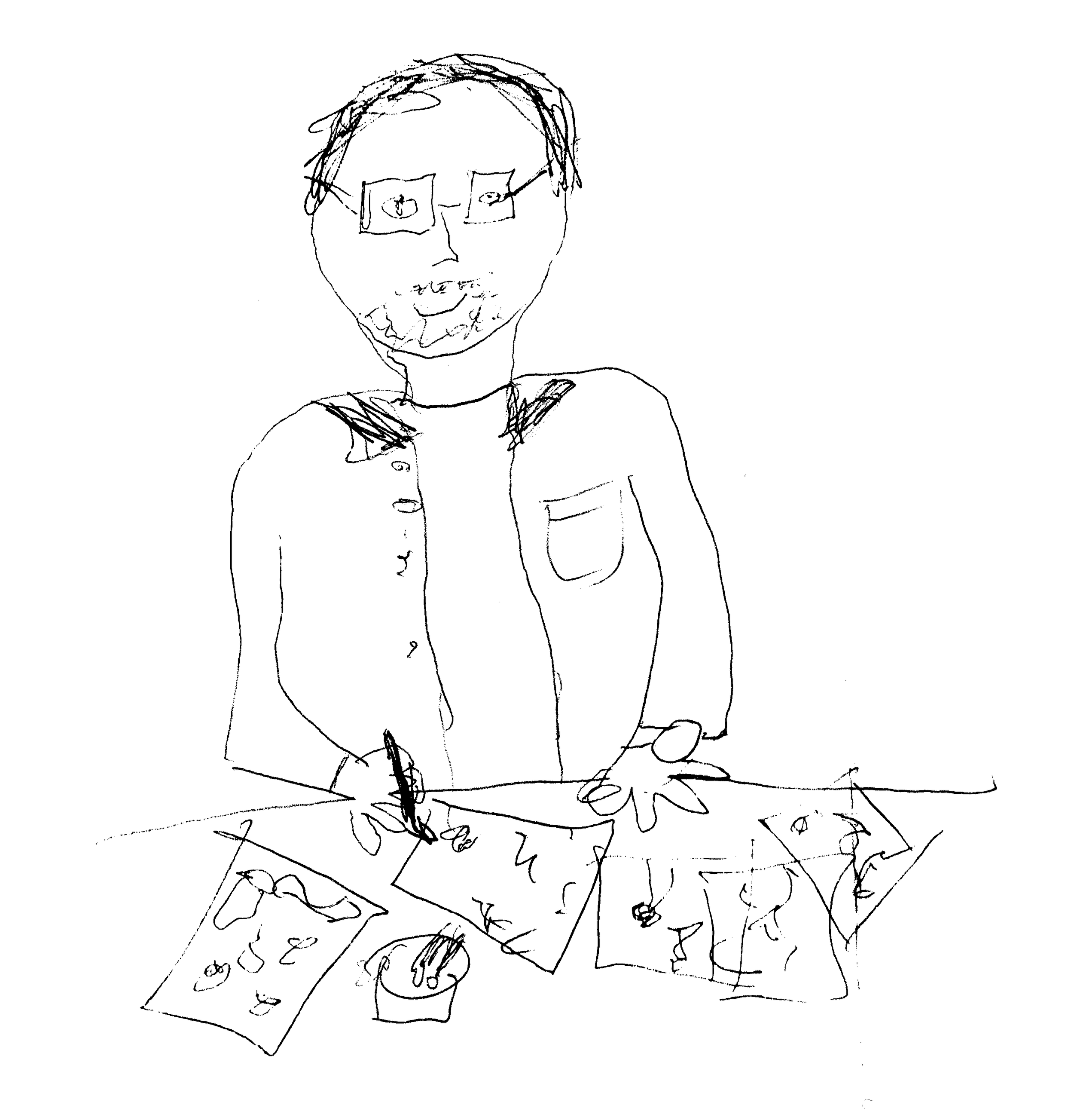
Portrait drawn by a Shubidubi participant during a session.
Bring Shubidubi into a room
Have a group or an occasion in mind?
Tell me a little about it.
We can start with a conversation or a 20-minute demonstration.
Plan a session
Already considering Shubidubi for an event?
Take a short, slightly unusual journey through the details of your session.
Shubidubi is also an artistic practice